
The 2026 election to the Scottish Parliament took place on the 7th of May 2026. This page collates all the BBS coverage and analysis around the election. You can find results on the 2026 Scottish Parliament Election Results page.
Note: The "AMS Ideal Projection" shows the total number of seats each party should have if the voting system's proportionality was working as intended.
This uses a simple multi-poll average. Only one poll per pollster is included, and you can see a complete record of (credible) polls in the BBS tracker. This projection uses new Scottish Parliament boundaries, using my calculated notional results for 2021 as a starting point. Please see this page for how projections work and important caveats.
List Vote
Constituency Vote
List Seats Per Region
Total Seats Per Region
The first chart in each section below shows the trendline for each party’s polling average from September 2025 up until polling day. The second chart shows the highest and lowest figure for each party out of the polls currently in the average.
Regional (List) Polling
Constituency Polling
Note: the sudden spike in the SNP figure and crash for the Greens on the 8th of April data point represents this being the first point after the close of nominations, when the Greens confirmed they were only contesting the constituency vote in 6 out of 73 seats. The BBS model has always worked on the basis of excluding the Greens from most seats, but as it was unclear what their final contest rate would be, constituency figures were reported as polled. Following the close of nominations, this chart uses a re-projection of vote shares excluding the Greens in the other 67 constituencies for the most accurate picture.
Seat Projections
Pre-Election Analysis
- You’ll have had your MSP then? (April 2026)
- Scotland’s right-wingers shouldn’t be dismissed or exaggerated (March 2026)
- Where are Reform’s votes coming from? (October 2025)
- A Tale of Two Civil Wars (August 2025)
- The SNP didn’t “break” the voting system in 2011… but this time they might (July 2025)
- Long Read: With one year to go, where do Scotland’s parties stand? (May 2025)
Ballot Box Battlegrounds
Party Profiles
Elections to the Scottish Parliament are conducted via the Additional Member System (AMS). Under this system voters cast two votes which are used to elect 129 MSPs. One of these uses the First Past the Post (FPTP) system everyone is familiar with. The country is divided into 73 Constituencies, each of which elects one Member of the Scottish Parliament (MSP). The party (or candidate, though the vast majority of votes are cast on a party basis) that receives the most votes wins the seat.
FPTP is a fundamentally unfair voting system, as only the largest group of voters in a given constituency win representation. The views of all other voters in that area go unheard if used as a standalone system. In extreme cases, entire cities, counties and regions can end up represented by one party, even when hundreds of thousands or even millions of voters have backed other parties.
This is recognised and counterbalanced by the other vote which uses a form of Proportional Representation. Constituencies are grouped together (in groups of 8 to 10) to form 8 Regions, each of which elects a further 7 MSPs (56 total) through the use of the D’Hondt method. This works by dividing each party’s share of the regional vote by one more than the number of seats they have won so far, accounting for constituencies, and is intended to ensure the result within each region is reasonably proportional.
This system is not perfect. The inclusion of an FPTP element can lead to parties winning more than their fair share of seats. The fact the proportionality is regional rather than national still means treating where votes were cast as somewhat more important than how many of them there were. The existence of two different votes, and thus categories of MSP, is confusing to voters and has led to frustrating and often misleading claims. However, it is significantly fairer than pure FPTP and ensures that most voters have at least some representation.
Ballot Box Scotland does not support or advocate for tactical voting. Not only are hare-brained tactical voting schemes a niche obsession of the terminally online with very little cut through to ordinary voters, attempting to deny those voters their fair representation is fundamentally undemocratic. You should vote in a way that best reflects your genuine beliefs; if that entails two different parties, then that’s fine and a natural consequence of the system, but it’s very likely to be fruitless trying to be tactical about it.
The next election will be fought on different constituency and regional boundaries than in 2021. Holyrood boundaries were last redrawn ahead of 2011, and a review by the non-partisan Boundaries Scotland has created a new set of constituencies and regions. Ballot Box Scotland took an in-depth look at the proposals at most stages of the review from initial, to revised, to revised again. I missed in-depth coverage of the second-to-last stage, before compiling notional results for the final version.
How boundaries are drawn can have a significant impact on the number of seats won by each party. Compared to a purely FPTP system, the proportional nature of AMS helps take the edge off changes, but they still have impacts. My estimate is that had the 2021 election been fought on these new boundaries, the Greens would have had two additional MSPs, coming one each from the SNP and Labour.
Candidate nominations closed on the 1st of April. In total, there are 686 individual candidates, drawn from 29 parties (of which 10 are standing in every region), with 35 Independents in the mix too, amounting to 138 options across the 8 regional lists. That makes 2026 the third busiest Holyrood election out of the seven so far, only behind the 142 options seen in both 2021 and 2007.
More in-depth figures about the number of candidates can be found in the SP26: Bring Out Your Candidates piece. You can also find a spreadsheet containing all the candidates here, and candidates are also listed on the relevant regional preview pages linked further down this page.
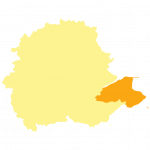
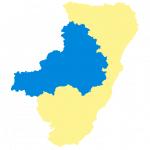
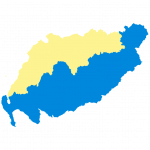
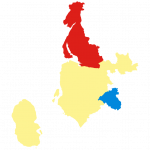
Detailed previews for each region and the constituencies within them, including candidates for the 2026 election, are available below. You can also find the results on the boundaries as they actually were here.
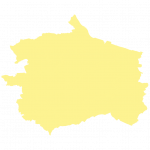
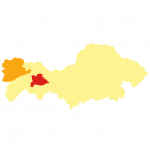
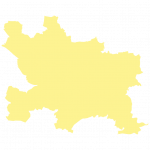
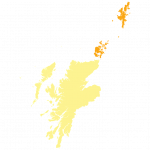
Due to the thoroughly antiquated nature of the UK’s democratic systems, it is not possible to be certain how the previous election would have went on the new boundaries. Whilst most other countries will collect and publish data right down to polling district level, in the UK we don’t get that for anything except Scottish local elections, and that’s only because those are counted by machine. For the 2022 Local Elections I collated that information here on BBS, in the most detailed election dataset anyone has ever published in Scotland’s history.
Instead, in order to have a baseline to compare the upcoming election’s results with, “notional” results for the 2021 election on the new boundaries have to be based on estimates rather than confirmed, raw data. Using the previously mentioned 2022 data to help identify highly localised support spreads, I calculated my own set of notionals for the 2021 election on the new boundaries. The interactive maps below show the calculated results for the new boundaries in each constituency, for both votes.
Whole Scotland: 2021 Notionals (Seat Winners)
Notional Vote Shares per Constituency
Total 2021 Constituency Vote
Total 2021 Regional Vote
A total of 40 MSPs are not re-standing in 2026. This is notably more than the 34 ahead of 2021. Note that as Holyrood is still quite a young parliament, we don’t have a settled idea of what a “normal” level of retirement looks like as yet. Of the 129 MSPs elected at the first ever Scottish Parliament election in 1999, there are currently 13 still serving in Holyrood. 8 of the retirements are from the class of 1999.
3 MSPs have been effectively deselected. List MSPs are considered “effectively” deselected where their 2026 list placement is lower than they would have needed to be elected in 2021. Constituency MSPs are considered “effectively” deselected where their constituency or list placement would not have elected them in 2021.
MSPs re-selected on spots that their party won in 2021 may nonetheless lose their seats, and effectively deselected MSPs may hold theirs, depending on their party’s fortunes. Where a list MSP resigned in the middle of this term and was replaced by another candidate, the 2021 list is reordered without them on it.
The totals for each party are affected by several mid-term changes:
- The SNP have lost 4 MSPs; Ash Regan defecting to Alba then becoming an Independent; John Mason being expelled and becoming an Independent; Fergus Ewing quitting and becoming an Independent; and Christina McKelvie sadly dying and losing the by-election to Labour.
- The Conservatives have lost 3 MSPs; Jamie Greene defecting to the Lib Dems; Jeremy Balfour quitting and becoming an Independent; Graham Simpson defecting to Reform UK.
- Labour have gained 1 and lost 3 MSPs; Davy Russell replaced the SNP’s Christina McKelvie at the subsequent by-election; Colin Smyth was expelled following indecent images charges and became an Independent; Foysol Choudhury was suspended following complaints against him; Pam Duncan-Glancy had the whip suspended following revelations about a friendship with a convicted sex offender.
- The Greens have lost 1 MSP; Alison Johnstone became the non-partisan Presiding Officer.
- The Lib Dems and Reform UK each gained an MSP via defections as noted in other party sections.
- A total of seven MSPs became Independents as noted in other party sections.
- Stephanie Callaghan, Uddingston and Bellshill (2021)
- Willie Coffey, Kilmarnock and Irvine Valley (2007)
- Titled Kilmarnock and Loudoun (2007-2011)
- Graeme Dey, Angus South (2011)
- Minister for Higher and Further Education and Veterans (2023-)
- Former Minister for Transport (2021-2022) and Parliamentary Business and Veterans (2018-2021)
- Natalie Don-Innes, Renfrewshire North and West (2021)
- Minister for Children, Young People and Keeping the Promise (2023-)
- James Dornan, Glasgow Cathcart (2011)
- Annabelle Ewing, Cowdenbeath (2016; first elected 2011)
- Previously Mid Scotland and Fife (2011-2016)
- Previously MP for Perth (2001-2005)
- Deputy Presiding Officer (2021-)
- Former Minister for Youth and Women’s Employment (2014-2016), Community Safety and Legal Affairs (2016-2018)
- Joe FitzPatrick, Dundee City West (2007)
- Former Minister for Parliamentary Business (2012-2018), Public Health, Sport and Wellbeing (2018-2020), Local Government Empowerment and Planning (2023-2024)
- Kate Forbes, Skye, Lochaber and Badenoch (2016)
- Deputy First Minister and Cabinet Secretary for Economy and Gaelic
- Former Cabinet Secretary for Finance and the Economy (2020-2023)
- Former Minister for Public Finance and Digital Economy (2018-2020)
- Mairi Gougeon, Angus North and Mearns (2016)
- Cabinet Secretary for Rural Affairs, Land Reform and Islands (2021-)
- Former Minister for Public Health and Sport (2020-2021), Minister for Rural Affairs and the Natural Environment (2018-2020)
- Best Ministerial Blazer Award Winner 2023 (let the gay man enjoy the superb blazer)
- Christine Grahame, Midlothian South, Tweeddale and Lauderdale (2011; first elected 1999)
- Previously South Scotland (1999-2011)
- Former Deputy Presiding Officer (2016-2021)
- Fiona Hyslop, Linlithgow (2011; first elected 1999)
- Previously Lothians (1999-2011)
- Cabinet Secretary for Transport (2024-)
- Former Cabinet Secretary for Economy, Fair Work and Culture (2020-2021), Culture, Tourism and External Affairs (2011-2020), Education and Lifelong Learning (2007-2009)
- Former Minister for Transport (2023-2024), Culture and External Affairs (2009-2011)
- Bill Kidd, Glasgow Anniesland (2011; first elected 2007)
- Previous Glasgow (2007-2011)
- Richard Lochhead, Moray (2006; first elected 1999)
- Previously North East Scotland (1999-2006)
- Minister for Business and Employment (2023-)
- Former Cabinet Secretary for Rural Affairs, Food and Environment (2007-2016)
- Former Minister for Further Education, Higher Education and Science (2018-2021), Just Transition, Employment and Fair Work (2021-2023)
- Gordon MacDonald, Edinburgh Pentlands (2011)
- Rona Mackay, Strathkelvin and Bearsden (2016)
- Ruth Maguire, Cunninghame South (2016)
- Michael Matheson, Falkirk West (2007; first elected 1999)
- Previously Central Scotland (1999-2007)
- Former Cabinet Secretary for NHS Recovery, Health and Social Care (2023-2024), Net Zero, Energy and Transport (2018-2023), Justice (2014-2018)
- Former Minister for Public Health (2011-2014)
- Audrey Nicoll, Aberdeen South and North Kincardine (2021)
- Shona Robison, Dundee City East (2003; first elected 1999)
- Previously North East Scotland (1999-2003)
- Cabinet Secretary for Finance and Local Government (2023-)
- Former Deputy First Minister (2023-2024)
- Former Cabinet Secretary for Social Justice, Housing and Local Government (2021-2023), Health and Sport (2014-2018)
- Former Minister for Public Health and Sport (2007-2011), Commonwealth Games and Sport (2011-2014)
- Kevin Stewart, Aberdeen Central (2011)
- Former Minister for Transport (2023), Mental Wellbeing and Social Care (2021-2023), Local Government, Housing and Planning (2016-2021)
- Nicola Sturgeon, Glasgow Southside (2011; first elected 1999)
- Previously Glasgow Govan (2007-2011), Glasgow (1999-2007)
- Former First Minister and Leader of the SNP (2014-2023)
- Former Deputy First Minister (2007-2014)
- Former Cabinet Secretary for Infrastructure, Capital Investment and Cities (2012-2014), Health and Wellbeing (2007-2012)
- Michelle Thomson, Falkirk East (2021)
- Previously MP for Edinburgh West (2015-2017)
- Evelyn Tweed, Stirling (2021)
- Elena Whitham, Carrick, Cumnock and Doon Valley (2021)
- Former Minister for Drugs and Alcohol Policy (2023-2024), Community Safety (2022-2023)
- Humza Yousaf, Glasgow Pollok (2016; first elected 2011)
- Former First Minister and Leader of the SNP (2023-2024)
- Former Cabinet Secretary for Health and Social Care (2021-2023), Justice (2018-2021)
- Former Minister for Transport and the Islands (2016-2018), Europe and International Development (2012-2016)
- Maurice Golden, North East Scotland (2021; first elected 2016)
- Previously West Scotland (2016-2021)
- Edward Mountain, Highlands and Islands (2016)
- Oliver Mundell, Dumfriesshire (2016)
- Douglas Ross, Highlands and Islands (2021; first elected 2016)
- Previously Highlands and Islands (2016-2017)
- Previously MP for Moray (2017-2024)
- Former Leader of the Scottish Conservatives (2020-2024)
- Liz Smith, Mid Scotland and Fife (2007)
- Tess White, North East Scotland (2021)
- Sarah Boyack, Lothian (2019; first elected 1999)
- Previously Lothian (2011-2016) and Edinburgh Central (1999-2011)
- Candidate for Leader in 2014, lost to Jim Murphy
- Minister for Transport and Planning (1999-2001)
- Pam Duncan-Glancy, Glasgow (2021)
- Rhoda Grant, Highlands and Islands (2007; first elected 1999)
- Previously Highlands and Islands (1999-2003)
- Richard Leonard, Central Scotland (2016)
- Former Leader of the Scottish Labour Party (2017-2021)
- Alex Rowley, Mid Scotland and Fife (2016)
- Previously Cowdenbeath (2014-2016)
- Former Deputy Leader of Scottish Labour (2015-2017)
- Mercedes Villalba, North East Scotland (2021)
- Jamie Greene, West Scotland (2016) EFFECTIVELY DESELECTED
- Elected as a Conservative, defected to the Lib Dems in April 2025
- Was not selected as the top candidate for West; this is not necessarily surprising given the lateness of his defection and not being based in the East Dunbartonshire portion that contributes the bulk of Lib Dem membership in the region.
- Beatrice Wishart, Shetland (2019)
- Alison Johnstone, Lothian (2011)
- Was Green before taking up the non-partisan role of Presiding Officer in 2021
The Scottish Parliament does not follow the same traditions for the Presiding Officer as the UK Parliament does for the Speaker. Whilst the Speaker may stand for re-election under that banner any number of times, and by convention will not face an opponent from any of the major parties, all Presiding Officers have served only a single term in that role. Additionally, only one former Presiding Officer – Alex Fergusson in the 2007-2011 session – has chosen to re-stand for election at all, and did so as a Conservative.
The four sitting Independents come two from the SNP and one each from Labour and the Conservatives.
- Foysol Choudhury (Lothian, 2021; was Labour) EFFECTIVELY DESELECTED
- Choudhury was suspended from Labour following allegations of sexual harassment. Selection was then re-opened for the constituency he’d been selected for, indicating deselection.
- Pam Duncan-Glancy, Glasgow (2021)
- Duncan-Glancy was originally intending to re-contest the election, but stepped back after details about her personal life emerged. She later had the Labour whip suspended entirely.
- John Mason (Glasgow Shettleston, 2011; was SNP)
- Previously MP for Glasgow East (2008-2010)
- Colin Smyth (South Scotland, 2016;was Labour) EFFECTIVELY DESELECTED
- Smyth was arrested and charged with possession of indecent images in August 2025. Legal proceedings are ongoing, and Labour have (rightly) suspended him as a member and thus candidate; although list selection had not been completed, he had been selected for the Dumfriesshire constituency. I am counting this as a deselection as, effectively, it is against the will of the candidate.
If you find this or other Ballot Box Scotland output useful and/or interesting, and you can afford to do so, please consider donating to support my work. I love doing this, but it’s a one-man project and takes a lot of time and effort. All donations, no matter how small, are greatly appreciated and extremely helpful.
(About Donations)